'Thành phố chết' trở thành tâm điểm cuộc chiến khốc liệt ở miền Đông Ukraine
6/10/22
Trong khi quân Nga tìm mọi cách để giành quyền kiểm soát Lysychansk và Severodonetsk, lực lượng Ukraine đang cố gắng cầm cự và chờ thêm vũ khí từ phương Tây.
Để di chuyển về thị trấn, các binh sỹ Ukraine tăng tốc với tốc độ chóng mặt trên chiếc SUV. Họ rú ga, bo góc, lách vào sân nhà dân, chạy ra ngoài rồi tìm chỗ ẩn nấp.
"Nếu nhìn thấy chúng tôi, họ sẽ nổ súng", Đại tá Yuriy Vashchuk nói.
Vashchuk cho biết "hiện không còn nơi nào an toàn trong thị trấn" nên cần phải nhanh chóng di chuyển nếu không muốn trở thành mục tiêu tấn công của pháo binh Nga.
Những ngày qua, Vashchuk lảng vảng quanh khu đất cao ở Lysychansk, thành phố bị chia cắt với Severodonetsk, nơi diễn ra cuộc giao tranh ác liệt nhất ở miền Đông Ukraine qua một con sông.
Trong xe, Vashchuk đặt sẵn một quả lựu đạn vào ngăn đựng cốc cạnh ghế lái. Hộp đạn lắc qua lắc lại trên bảng điều khiển mỗi khi anh lái xe.
Thành phố chết
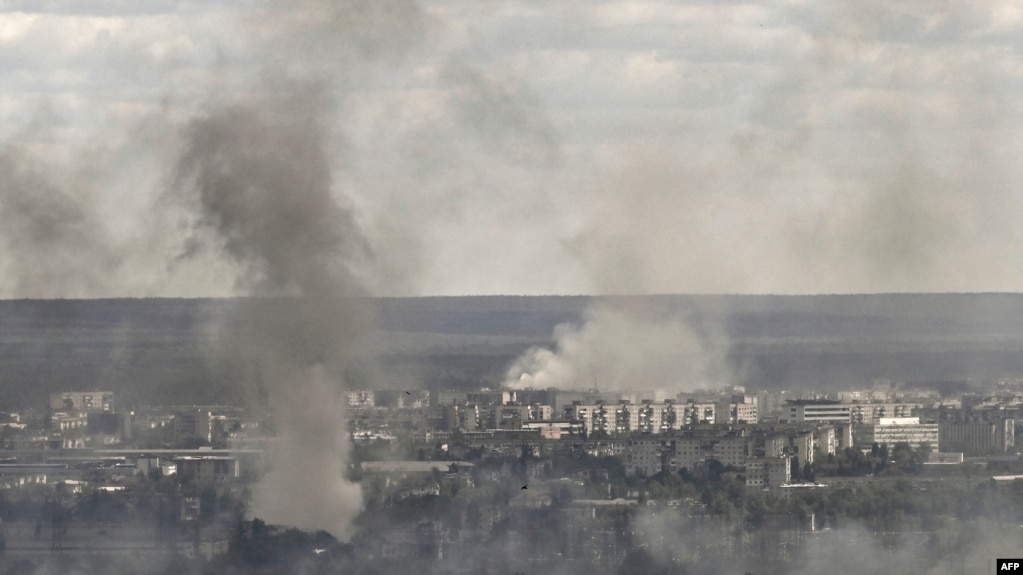
Trên những ngọn đồi nhìn ra Severodonetsk, khói từ hàng chục đám cháy bốc lên. Con đường tiếp tế duy nhất ở phía tây rải rác các phương tiện bị trúng đạn của pháo binh Nga.
Cứ vài phút, những quả đạn pháo lại bay ra tới tấp.
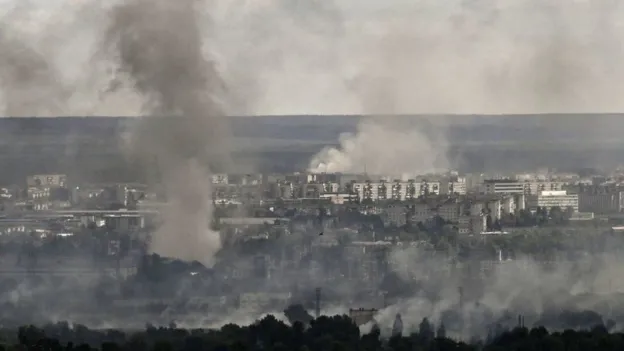
Các cột khói bốc lên sau các cuộc pháo kích pháo kích tại Severodonetsk. (Ảnh: NYT)
Lysychansk và Severodonetsk, vốn bị ngăn cách bởi sông Seversky Donets đang trở thành tâm điểm của trận chiến ở miền Đông Ukraine.
Tổng thống Ukraine Volodymyr Zelensky gần đây gọi những nơi này là các thành phố chết. Hầu hết 100.000 dân thường Lysychansk và Severodonetsk đều đã rời đi trước chiến tranh.
Mục tiêu của Nga được làm rõ ngay từ đầu. Họ muốn giành quyền kiểm soát của các thành phố này để làm bàn đạp tiến công sang phía tây và nhắm vào Kramatorsk, nơi có bộ tư lệnh quân sự vùng Donbass của Ukraine.
Trong khi đó, chiến lược của Ukraine vẫn chưa rõ ràng.
Trong những tuần gần đây, ông Zelensky phong phanh nói về việc rút lui khỏi Severodonetsk và các rủi ro lâu dài với động thái này.
"Việc giành lại thị trấn này sẽ rất hao người tốn của", ông Zelensky nhận định, nhấn mạnh việc giành lại Severodonetsk sẽ khiến Ukraine tổn thất nhiều thiết bị quân sự và quân đội.
Khi được hỏi liệu các lực lượng của Ukraine có rút khỏi Severodonetsk hay không, ông Zelensky thừa nhận một cuộc phản công để giành lại thành phố này sẽ cần số lượng thiết bị quân sự và quân đội gấp 5 lần.
Nhưng tới đêm 8/6, ông lại nhấn mạnh tầm quan trọng của thành phố này, coi cuộc chiến tại đây có ý nghĩa then chốt với toàn cục.
"Xét theo nhiều phương diện, số phận của Donbass được quyết định ở đó", nhà lãnh đạo Ukraine khẳng định.
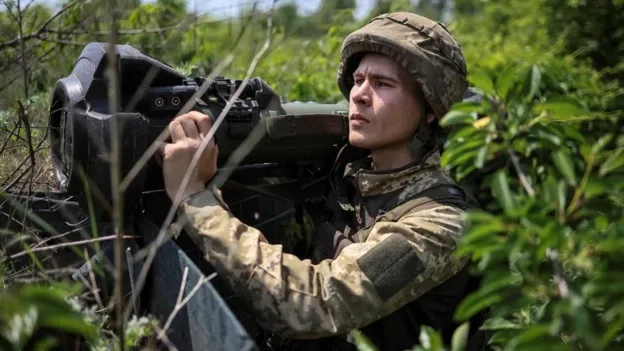
Trên thực tế, các cuộc giao tranh ở các vùng đồng bằng tại miền đông Ukraine đang trở thành cuộc chạy đua giữa chiến thuật của Nga - tiến công chậm rãi giành lấy các mục tiêu và việc chuyển giao chậm chạp các vũ khí của phương Tây cho Ukraine.
Quân đội và chính phủ Ukraine hiện đã không còn giấu diếm các thách thức mà họ phải đối mặt ở miền Đông 3 tháng sau khi Nga bắt đầu chiến dịch quân sự.
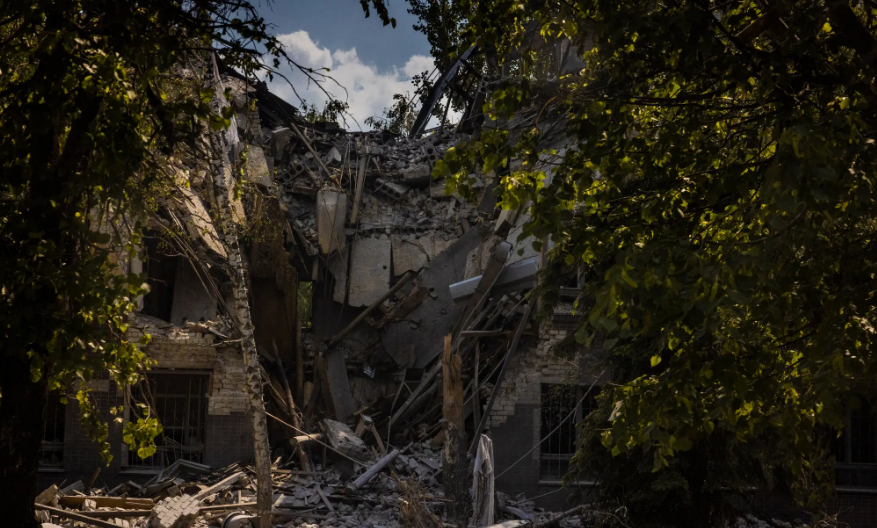
Một ngôi nhà bị phá hủy ở Lysychansk. (Ảnh: NYT)
Các bản cập nhật chiến sự gần đây bắt đầu xuất hiện các thất bại - dường như là một chiến thuật nhằm tạo thêm cảm giác cấp bách thúc giục phương Tây gửi thêm vũ khí hạng nặng.
Hiện tại, con đường tiếp tế duy nhất tới Severodonetsk cho lực lượng Ukraine là một cây cầu bị chặn một phần. Hai cây cầu khác trước đó bị phá hủy trong các cuộc giao tranh.
Trên đất liên, bờ phía tây là thành phố Lysychansk. Hai thành phố tạo thành một khu đô thị duy nhất chỉ cách nhau một con sông. Lysychansk được coi là vị trí dự phòng an toàn hơn cho các binh sỹ Ukraine chiến đấu trong khu vực.
Ở Lysychansk, cành cây bị chặt và các mảnh pháo nằm rải tác trên các con đường trong thành phố - nơi gần như không còn bóng người qua lại.
Đường dây điện bị đứt rủ xuống từ cột điện. Trên một con đường, một tên lửa chưa nổ của Nga nhô ra khỏi vỉa hè.
Bên kia sông, những con phố ở Severodonetsk có lúc yên lặng lạ thường, lúc thì ì xèo tiếng súng và tiếng pháo nổ.
Hỏa lực từ các khẩu pháo cỡ lớn trên vang vọng khắp khu vực.
Mòn mỏi chờ vũ khí từ phương Tây
Cách vài km về phía tây, giao tranh xảy ra quanh các ngôi làng nhỏ khi nhánh quân Nga cố gắng cắt đường tiếp tế, bao vây hai thành phố và bẫy các chiến cơ của Ukraine. Hai bên nã pháo liên tục và Nga chiếm ưu thế.
Mê cung các con đường nông thôn trở thành con đường duy nhất của lính Ukraine, nhưng nó cũng dễ bị pháo binh Nga tấn công.
Tại một cánh đồng cách đường mét hôm 8/6, một xe quân sự Ukraine bốc cháy, khói đen bốc lên nghi ngút.
"Họ đang cố gắng tạo thành một vòng tròn để bẫy tất cả binh lính bên trong và tiêu diệt họ", Mariana Bezugla, Phó chủ nhiệm Ủy ban An ninh, Quốc phòng và Tình báo tại Quốc hội Ukraine cho hay.
Phía Ukraine không tiết lộ số quân điều động tới đây nhưng bà Bezugla cho biết hàng nghìn binh sỹ được triển khai trong vực có nguy cơ bị bao vây.
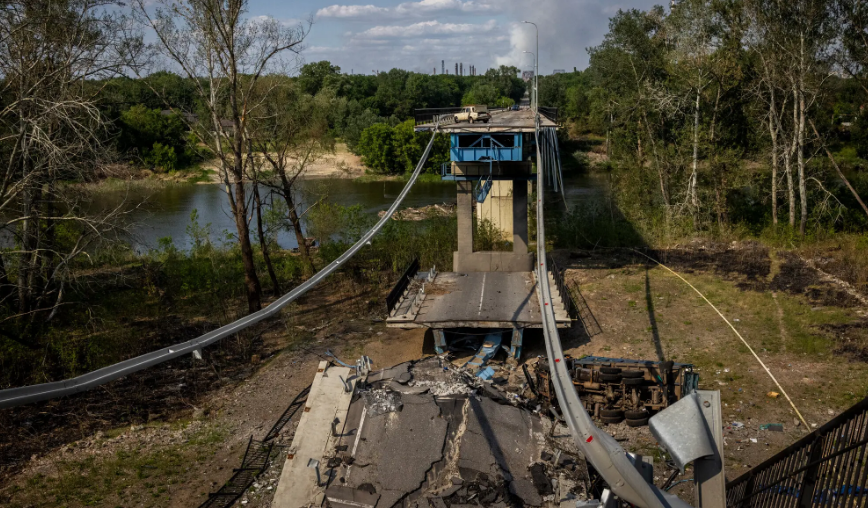
Một cây cầu trong khu vực bị đánh sập. (Ảnh: NYT)
Bà Bezugla sống ở khu vực tiền tuyến 2 tuần qua với nhiệm vụ giám sát các khoản viện trợ quân sự cho Ukraine.
Chính phủ Ba Lan gần đây cam kết sẽ gửi xe tăng và xe bọc thép cho Ukraine. Na Uy hứa hẹn cung cấp thêm xe pháo tự hành, phụ tùng, đạn dược. Hồi đầu tháng, Mỹ và Anh cũng đánh tiếng về các bệ phóng đa tên lửa tiên tiến, cơ động mà quân đội Ukraine khẳng định họ đang rất cần.
Nhưng không rõ bao nhiêu trong số này đã tới những nơi cần thiết và số lượng có đáp ứng đủ nhu cầu hay không.
“Tôi không thể nói rằng tôi hài lòng với tiến độ và số lượng cung cấp vũ khí. Hoàn toàn không. Nhưng đồng thời, tôi vô cùng biết ơn các quốc gia đã hỗ trợ chúng tôi”, Bộ trưởng Quốc phòng Ukraine Oleksiy Reznikov nói.
Bezugla nói bà cũng thấy cảm kích nhưng không hiểu vì sao sự giúp đỡ từ phương Tây không nhằm mục đích giúp Ukraine chiến thắng mà chỉ nhằm giúp Kiev đối phó và cầm cự.
"Nó làm tôi lo lắng", bà chia sẻ.
Ngoài cánh đồng lúa mì xanh mướt, dấu hiệu cho thấy Ukraine đang cần thêm viện trợ quân sự là mảnh vỡ của một khẩu lựu pháo M777.
Khí tài được Mỹ viện trợ trong những tuần trước này nổ tung thành nhiều mảnh sau khi lực lượng Ukraine thua trong một trận địa đạn pháo. Xác các mảnh vỡ nằm rải rác quanh các miệng hố là dấu tích mà các cuộc pháo kích để lại.
Song Hy(Nguồn: The New York Times)
What Happened on Day 106 of the War in Ukraine
Updated June 10, 2022, 6:48 a.m. ET

A member of the Ukrainian regional police force patrolling Lysychansk on Wednesday.Credit...Ivor Prickett for The New York Times
Here’s the latest on the war in Ukraine.

An unexploded Russian rocket protrudes from a sidewalk in the city of Lysychansk, Ukraine.
LYSYCHANSK, Ukraine — Just to move about town, Ukrainian soldiers accelerate to breakneck speeds in their S.U.V.s, screech around corners, zip into courtyards, then pile out and run for cover.
“They see us and they open fire,” Col. Yuriy Vashchuk said of the need to move quickly or become a vulnerable target for Russian artillery. “There’s no place in this town that is safe.”
He was careering around on the high ground of Lysychansk, across the river from Sievierodonetsk, the site of the fiercest fighting in Ukraine’s east. To be prepared, he placed a hand grenade in the cup holder between the front seats of his vehicle. A box of pistol ammunition slid back and forth on the dashboard as he drove.
Signs of Ukraine’s tenuous military positions are everywhere: On the hills overlooking Sievierodonetsk, smoke from a dozen or so fires testify to weeks of seesaw urban combat. The single supply route to the west is littered with burned vehicles, hit by Russian artillery.
The clanging, metallic explosions of incoming shells ring out every few minutes.
These two cities, separated by the Seversky Donets River, have become the focal point of the battle in the east, though weeks of bombardment have driven away most civilians, and President Volodymyr Zelensky of Ukraine recently referred to them as “dead cities.’’

Ukrainian regional police patrolled in the city of Lysychansk, on the high banks across from Sievierodonetsk.

Smoke filled the sky over the the city of Sievierodonetsk, where intense street fighting is taking place between Ukrainian and Russian forces.
Russia’s goal is clear: It aims to capture the cities, even if that means flattening them, and continue its march westward.
Yet Ukraine’s strategy there remains unclear. Analysts say Sievierodonetsk, with its empty streets and hollowed-out buildings, is of limited military significance, and in recent days Mr. Zelensky has spoken both of the merits of pulling back and the longer-term risks of doing so.
On Wednesday night, he swung back toward emphasizing its importance, framing the fighting there as pivotal to the broader battle for the region. “In many ways, the fate of our Donbas is being decided there,” he said in his nightly speech to the nation.
“We defend our positions, inflict significant losses on the enemy,” Mr. Zelensky said. “This is a very fierce battle, very difficult. Probably one of the most difficult throughout this war.”
Still, the government’s mixed signals emerged again on Thursday when Oleksiy Reznikov, Ukraine’s defense minister, made a desperate plea for more powerful weapons. “We have proved that, unlike many others, we do not fear the Kremlin,” he said. “But as a country we cannot afford to be losing our best sons and daughters.”
He warned that as many as 100 Ukrainian soldiers were being killed every day.
Indeed, the fighting on the plains in eastern Ukraine has become a race between Russia’s tactic of making slow, methodical advances that gain ground even as they reduce towns to rubble and kill untold numbers, and the delivery — far too slow, Ukrainians say — of powerful Western weapons needed to halt the invaders.
The Ukrainian military and government are now making no secret of the challenges they face in the east, three and a half months after Russia invaded. Their daily updates that highlight real setbacks are atypically honest by the standards of military press offices, a tactic perhaps intended to add a sense of urgency to their daily calls for heavy Western weaponry.

Members of the Ukrainian regional police force patrolled in the city of Lysychansk.Credit...Ivor Prickett for The New York Times

A destroyed building in the city of Lysychansk.
Russia has also been moving swiftly to punish Ukrainian soldiers captured on the battlefield.
On Thursday, two Britons and a Moroccan who fought for the Ukrainian military were sentenced to death by a court in a Russian-occupied region of eastern Ukraine after they were accused of being mercenaries, Russia’s Interfax news agency reported.
The death sentences for the men — Aiden Aslin, 28, and Shaun Pinner, 48, of Britain and Brahim Saadoun of Morocco — alarmed human rights advocates and raised questions about the protections for thousands of foreign-born fighters serving in Ukraine, some of whom have been taken prisoner.
In Russia, investigators said on Thursday that they had opened 1,100 cases of potential “crimes against peace” committed by captured Ukrainian service members, possibly paving the way for a mass show trial.
The fighting in Sievierodonetsk has come down to block-by-block combat, though Oleksiy Arestovych, an adviser to Mr. Zelensky, suggested on Thursday that Russia may have partly withdrawn to clear the battlefield for further artillery bombardments.
Sievierodonetsk lies on the mostly flat, eastern bank of the river and the Ukrainian forces’ sole supply line is a partly obstructed bridge. Two other bridges were blown up earlier in the fighting. On the river floodplain below one of the ruined bridges lies the upside-down wreck of a truck that plunged when the span was destroyed.

By The New York Times
On the high, western bank is the city of Lysychansk. The two cities form a single metropolitan area, separated only by the river. Lysychansk, on the high bank, is seen as a more defensible fallback position for the Ukrainians fighting in this area.
In Lysychansk, asphalt chunks, sheared-off tree branches and other debris from shelling litter the city’s streets, which were otherwise mostly empty on a visit this week. Broken power lines droop from poles. At one spot, an unexploded Russian rocket juts out of a sidewalk.

Abandoned and destroyed vehicles at a blown bridge over the Seversky Donets River, with smoke billowing in the distance from the battle in Sievierodonetsk.

A member of the Ukrainian regional police force patrolled near the Seversky Donets river, which divides the cities of Lysychansk and Sievierodonetsk.
Across the river, the streets in Sievierodonetsk were at moments eerily quiet, at other times a cacophony of gunshots and explosions.
Rapid fire from the large-caliber guns on armored personnel carriers, sounding like a jackhammer at work, echoed around the area.
A few miles to the west, another battle is raging across a pastoral landscape of rolling steppe and small villages as Russian forces try to cut supply lines, surround the two cities and trap the Ukrainian fighters there. The two armies continually fire artillery at each other, with the Russians getting the upper hand for now.
A maze of rural back roads is now the only route in for the Ukrainians, and it is vulnerable to Russian artillery. In a field a few hundred yards off a road on Wednesday, a Ukrainian military vehicle burned and sent up a plume of black smoke.
“They are trying to make a circle, to trap all soldiers inside and destroy them,” said Mariana Bezugla, the deputy head of the Security, Defense and Intelligence Committee in Ukraine’s Parliament.

Ukrainian forces firing a salvo of rockets towards Russian positions near Sievierodonetsk last week.

Destroyed vehicles sat next to a large bomb crater last week in the largely deserted town of Siversk, around 20 miles from Sievierodonetsk.
The military does not disclose troop numbers, but Ms. Bezugla said several thousand Ukrainian soldiers were now deployed in the area at risk of being surrounded.
Ms. Bezugla wears a military uniform and gold-tinted aviator glasses while driving about in a van once used as an armored vehicle for a bank. She has been living in the potential encirclement zone for the past two weeks, she said, working to ensure that military aid to Ukraine is not misused. That issue is likely to rise in importance as billions of dollars in Western aid arrives.
That weaponry is flowing in, but not reaching the front quickly. Poland has promised tanks and armored vehicles, according to the Polish government. Norway has sent self-propelled howitzers, along with spare parts and ammunition. The United States and allies sent towed howitzers. And this month the United States and Britain promised advanced, mobile, multi-rocket launchers, which the Ukrainian military has said it needs to hit Russian targets far from the front.
But it is unclear how much of it has arrived in the places it is most needed, and whether it will be enough.
“I cannot say that I am satisfied with the tempo and quantity of weapon supplies. Absolutely not,” said Mr. Reznikov, the defense minister. “But at the same time, I am extremely grateful to the countries that support us.”

Civilians who had remained in the city were living in the basement of an apartment block in Lysychansk.

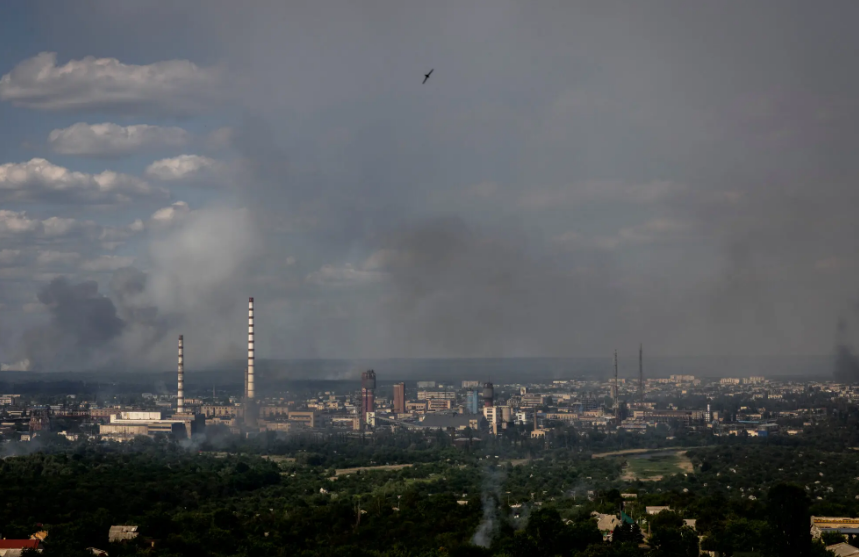
Fires burned at the Lysychansk oil refinery.
Ms. Bezugla said she was also thankful. “But for me, it’s hard to understand why help is given in doses, just enough to survive but not enough to win,” she said. “It worries me. Our people are dying every day here.”
Out in a field of green wheat shoots, one sign of the need for additional American military aid was the blown-up debris of earlier assistance. An American M777 howitzer had lost an artillery duel; it was blasted into several blackened, charred pieces amid craters from Russian artillery.

A destroyed, American-made M777 howitzer in a field outside the city of Lysychansk on Wednesday.
Reporting was contributed by Oleksandr Chubko from Kramatorsk, Ukraine, Marc Santora from Warsaw, Michael Levenson from New York, Dan Bilefsky from Montreal, Ivan Nechepurenko from Tbilisi, Georgia and Valerie Hopkins from Chernihiv, Ukraine.
https://www.nytimes.com/live/2022/06/09 ... lysychansk